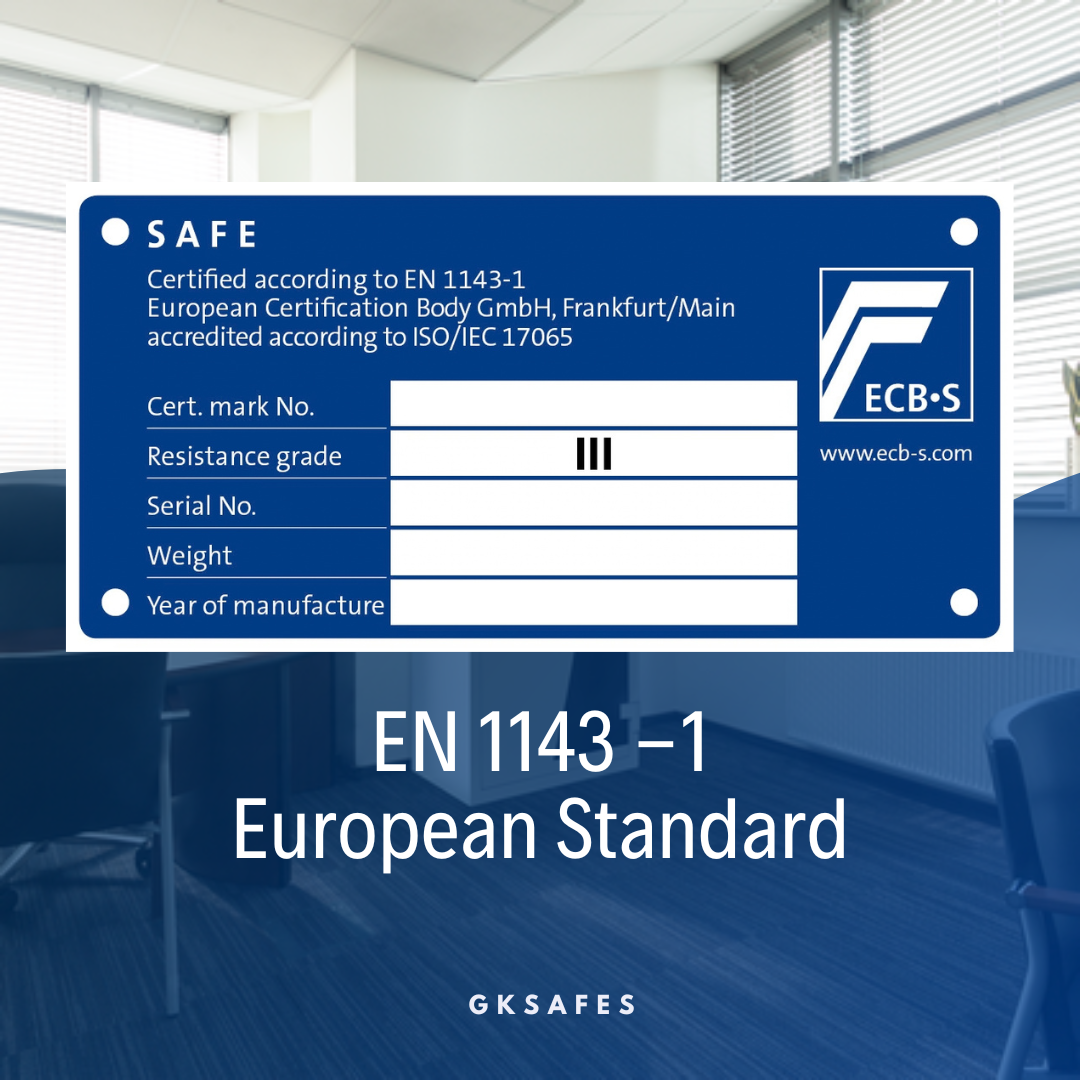
When it comes to safeguarding cash, jewellery, important documents, and other valuable assets, not all safes provide the same level of protection. EN 1143-1 is a widely recognised European standard that assesses and classifies the burglary resistance of safes, helping users make informed decisions when choosing secure storage solutions.
What Is EN 1143-1?
EN 1143-1 is a European security standard that defines the testing and classification of secure storage units, including safes, vaults and strongroom doors, based on their resistance to burglary.
Products are assigned security grades (Grade 0 - 13) according to their performance in break-in tests, helping users compare protection levels and choose suitable security solutions for cash, jewellery, documents and other valuables.
Rather than relying on steel thickness or manufacturer claims, EN 1143-1 provides a standardised way to assess a safe’s burglary resistance, making it a useful guide for choosing reliable protection. This makes the standard particularly relevant for businesses and organisations that need a clearly defined level of physical security.
How Is an EN 1143-1 Safe Tested?
EN 1143-1 certification involves testing the secure storage unit against burglary attack methods. The testing process is designed to assess how resistant the safe is to attempts to gain unauthorised access. Tests involve tools such as drills, grinders and pry bars to assess the safe’s resistance to forced entry, including drilling, cutting and other forms of attack.
The testing process evaluates the tools used, the effort required and the resistance offered by the safe. By relying on standardised testing rather than appearance or steel thickness alone, EN 1143-1 provides a consistent way to assess and compare the burglary resistance of safes.
EN 1143-1 Security Grades
EN 1143-1 covers a range of resistance grades. The grade provides an indication of the level of burglary resistance demonstrated during testing. The grades range from Grade 0 to Grade 13, with higher grades generally offering greater resistance to break-in attempts.
The right grade depends on the value of the items being protected, the level of security required and any applicable insurance requirements.
Grade 0–I: Suitable for basic protection of cash, documents and everyday valuables.
Grade II–III: Offers increased protection for businesses storing moderate amounts of cash and valuable items.
Grade IV–VI: Suitable for higher-value assets, including jewellery and larger cash holdings.
Grade VII and above: Designed for applications requiring a higher level of burglary resistance, such as protecting substantial valuables or high-value assets.
For businesses, this classification can make it easier to specify the required level of physical security when purchasing a safe. It also provides a recognised technical reference when comparing certified products.
Choosing the right security grade helps ensure that a safe provides an appropriate level of protection for its intended use. However, insurance limits and requirements vary, so it is important to check with your insurer before making a purchase.
Why Certification Matters for Businesses
Choosing a safe involves more than its size or construction. Businesses must consider their security needs, access control, alarm systems and insurance requirements.
An EN 1143-1 certified safe provides an independently tested security grade, helping businesses assess its burglary resistance and choose an appropriate level of protection.
This is particularly important for businesses handling:
Cash
Jewellery and precious metals
Confidential documents and financial records
High-value jewellery and inventory
Sensitive business information
By choosing a safe with the appropriate certification, businesses can make more informed security decisions and better protect their valuable assets. They should also check with their insurer to ensure the selected grade meets any applicable insurance requirements.
What About Fire Protection?
EN 1143-1 focuses on burglary resistance and does not assess a safe’s general fire protection capabilities.
If fire protection is also required, look for a safe with a separate fire-resistance certification, such as EN 1047-1 or EN 15659, depending on the level of protection needed.
It is important to remember that burglary resistance and fire protection are two different features. Choosing a safe with the appropriate certifications helps ensure both valuable assets and important documents receive suitable protection.
Choosing an EN 1143-1 Certified Safe
When selecting a high-security safe, consider more than just its size and price. It is important to ensure the safe meets your security needs and has valid certification.
Key factors to consider include:
Certification: Check the EN 1143-1 standard and applicable edition.
Security grade: Choose a grade that matches your protection needs and insurance requirements.
Certified model: Ensure the exact safe model is covered by the certification.
Locking system: Check the lock type and relevant certification.
Fire protection: Look for separate fire-resistance certification if required.
By checking these factors, you can make a more informed decision when choosing an EN 1143-1 certified safe for your business or personal valuables.
EN 1143-1 certified safe models to consider include:
Chubbsafes DuoGuard T2 – EN 1143-1 certified safe.
Chubbsafes Senator – Designed for secure storage with EN 1143-1 certification.
Godrej Euro Cash (Grades I–VI) – Available in different security grades under EN 1143-1.
Godrej Defender Pro (Grade II) – A Grade II model specified with EN 1143-1 certification.
Summary
EN 1143-1 provides an important benchmark for burglary-resistant safes. Instead of relying solely on claims about construction or security, the standard establishes requirements and testing methods that allow secure storage products to be classified according to their resistance to burglary.
Each security grade may also be associated with an indicative cash rating, which estimates the amount of cash a safe can protect for insurance purposes. However, these ratings are guidelines rather than guaranteed coverage limits, as the actual insured amount depends on the insurer, location, risk conditions and individual policy requirements.
When security matters, look beyond the safe's appearance — check the certification, the security grade and the documentation behind it. This helps ensure the safe provides an appropriate level of security for the value of the assets being stored.